Fashion and Style for Women Over 50: Finding What Feels Like You
Good style doesn’t come with an age limit. Here’s my practical guide to clothes that fit your life, colours you love and outfits you’ll actually enjoy wearing.
By Rachel Branson · 11 November 2026
There’s a particular kind of fashion advice aimed at women over 50 that starts by telling us what to stop wearing. Too bright, too short, too fitted, too much. I’d rather start somewhere more useful: what do you enjoy wearing, and what would make getting dressed easier?
Our bodies, routines and preferences can change. That doesn’t mean we need to disappear into a wardrobe of sensible things we don’t particularly like.
My approach is to keep the personality and sort out the practicalities. Good fit, comfortable fabrics and a few combinations you trust can make much more difference than following another list of age-related rules.
Start with your life, not your age
Before buying anything, think about an ordinary fortnight. How much time do you spend working, walking, socialising, travelling or relaxing at home?
Your wardrobe should reflect that balance. If most days involve being on your feet, comfortable everyday outfits deserve more attention than another dress for a hypothetical occasion.
I find three words useful here. Perhaps yours are relaxed, colourful and polished. Or simple, artistic and comfortable. Use them as a gentle filter when shopping, rather than trying to squeeze yourself into someone else’s idea of elegance.
Then identify what’s missing. “I need a light layer that works with my trousers” is a much better shopping brief than “I need a whole new look”.
Get the fit right for the body you have now
The number on the label isn’t a verdict. Sizing varies, so I’d always choose the garment that sits comfortably rather than the size I think I ought to wear.
Try clothes with the underwear and shoes you’ll actually wear underneath and alongside them. Then move about. Sit down, reach forward and walk across the room.
A few things worth checking:
- Shoulders: a structured shoulder seam should sit where intended, without pulling across your back.
- Waistbands: check how they feel sitting down, not just standing in front of a mirror.
- Bust and hips: look for buttons straining or fabric pulling into horizontal lines.
- Trouser hems: try them with your usual shoes and make sure they clear the floor.
Simple alterations can rescue an otherwise lovely piece. Shortening a hem or adjusting a waist may be worthwhile; changing the shoulders or overall structure can be more involved. Ask a tailor before committing to a complicated fix.
Use proportion without making it a rulebook
Proportion is about how pieces work together, not about making your body look like someone else’s.
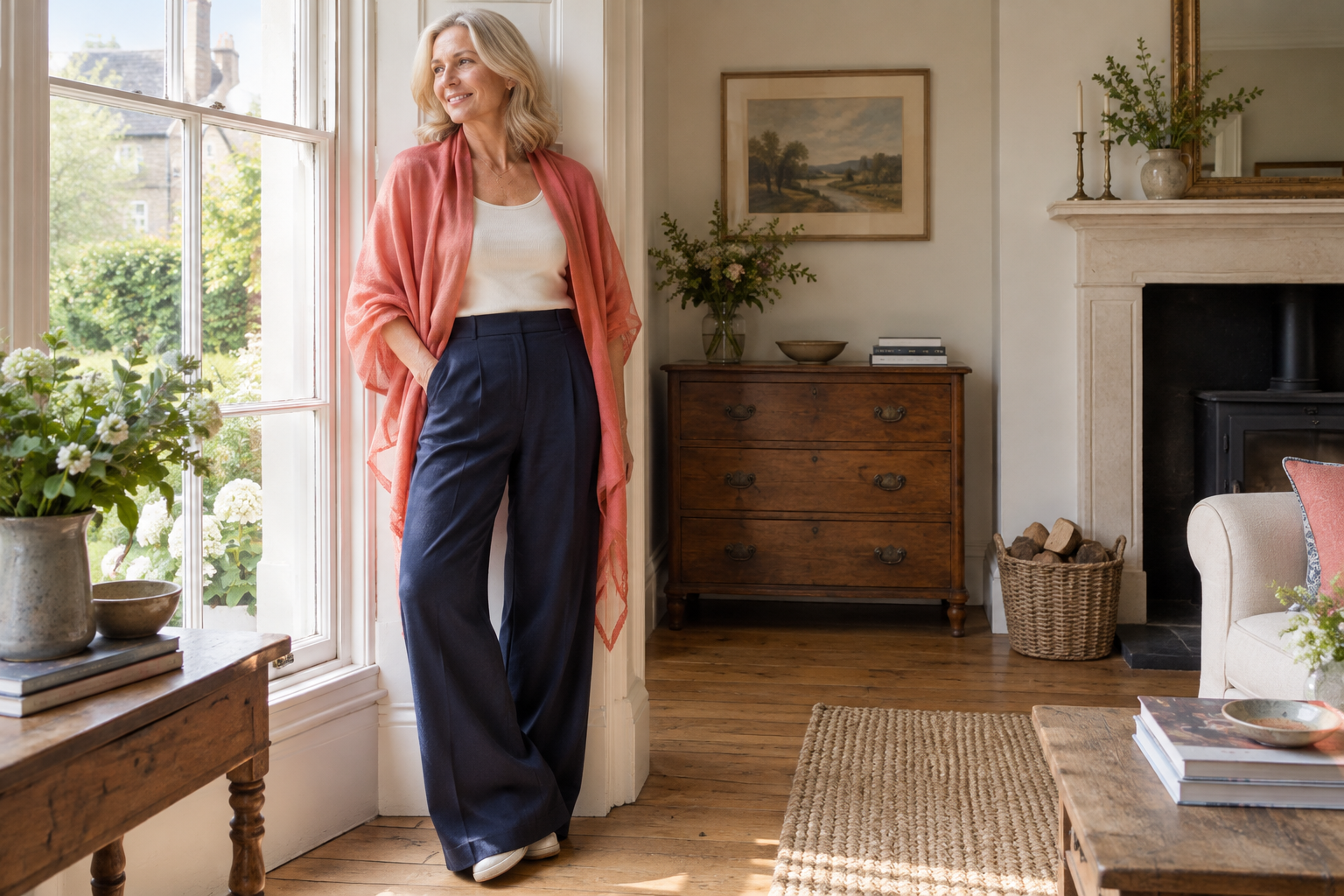
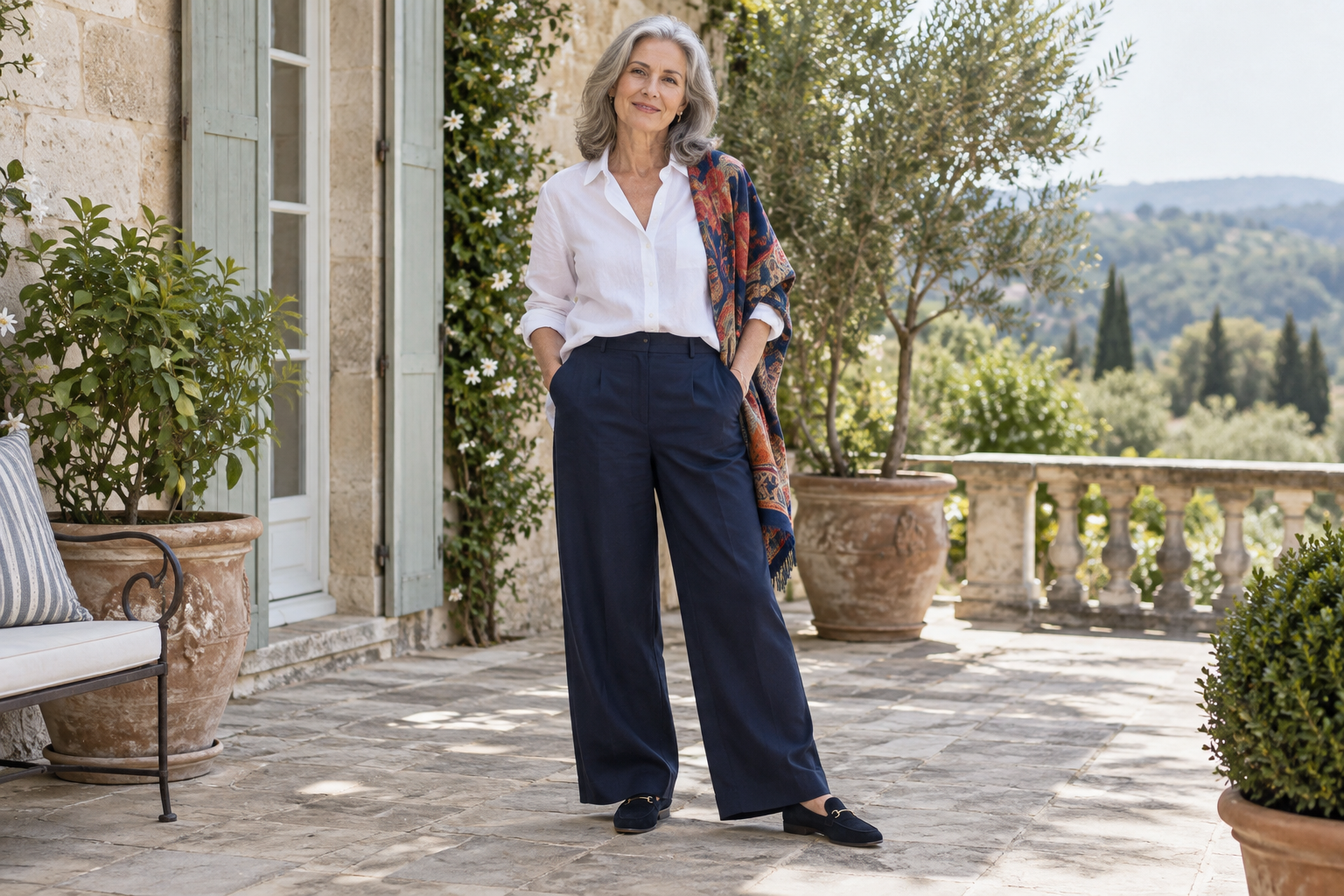
With roomy trousers, a neater top or shorter jacket can create a clear outline. That doesn’t have to mean tight. A soft shirt with a small front tuck often does the job, if tucking feels comfortable.
Prefer everything loose? Try different lengths: a hip-length top over flowing trousers, with an open jacket finishing above or below the top’s hem. Those separate lines give the outfit some definition.
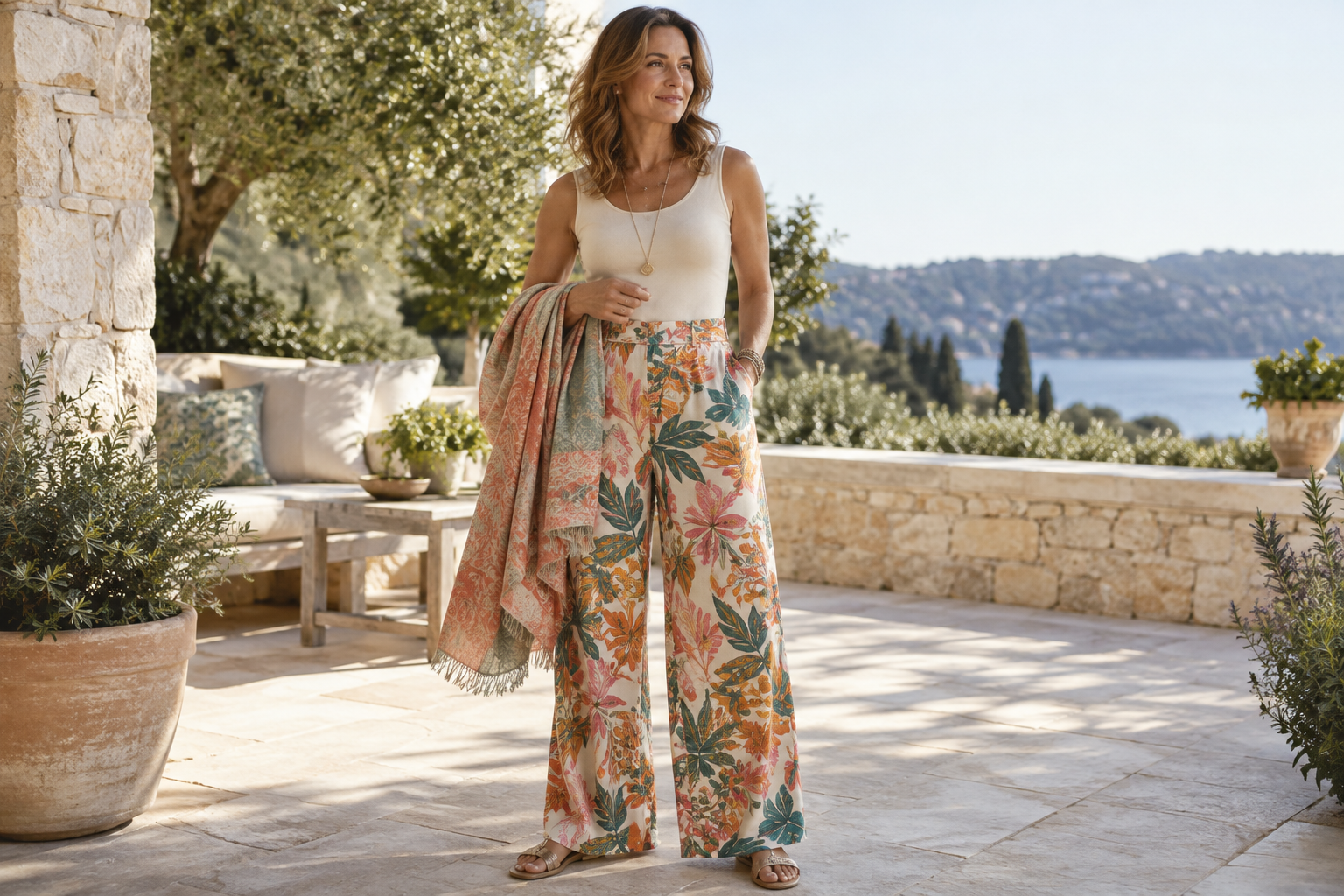
I love palazzo trousers for their movement. When trying wide-leg trousers, check that the waistband stays put and the fabric falls freely over your hips. Walk in them too: the shape should feel easy, not like something you have to manage.
Wear colour where you enjoy it most
You don’t need to retreat into beige, and you don’t need to become a rainbow either.
Start with two or three base colours that work with shoes and bags you already own. Navy, chocolate, cream, charcoal and olive are useful possibilities, but your own favourites matter more than a prescribed palette.
Then add a colour you genuinely love. If you’re unsure, hold it near your face in daylight. Does it give the effect you want? Do you enjoy seeing yourself in it? That’s more helpful than buying it because it’s supposedly right for your age.
Print can be surprisingly easy to combine. Pick out one colour from the pattern and repeat it in a plain top, trousers or shoes. There’s no need to match every detail.
Make comfort part of the design
An outfit you’re constantly adjusting rarely feels stylish. I’d check the small irritations before falling in love with the overall look.
Does the neckline stay where you want it? Are the sleeves comfortable under a jacket? Does the fabric feel pleasant against your skin?
If your temperature fluctuates, light layers can be easier to manage than one heavy jumper. Pay attention to fabric weight, weave and lining as well as fibre content: the label alone won’t tell you exactly how a garment will feel.
For shoes, look for enough toe room, secure fastening and cushioning that suits you. Trainers, loafers, sandals and boots can all work beautifully; the useful pair is the one that supports the walking your day involves.
Build a few outfits you can repeat
There’s nothing dull about knowing what works. A reliable outfit formula saves time while leaving plenty of room for colour and accessories.
Here are four combinations I’d happily build on:
- Everyday: straight-leg jeans, a soft knit and comfortable trainers. Add a jacket when needed.
- Lunch out: plain palazzo trousers, a simple top and an open short kimono. Keep accessories uncomplicated if the kimono is printed.
- Work or a meeting: tailored trousers, a shirt or fine knit, and loafers. A softly structured jacket adds definition without requiring a full suit.
- An evening invitation: a favourite dress or trouser outfit, earrings and a light wrap. Try the whole combination on beforehand, including shoes.
Take a quick photograph of combinations you like. Your own small outfit library is often more useful than saving dozens of looks that don’t suit your daily life.
Choose versatile pieces, not endless basics
A wardrobe can be full of basics and still feel impossible to use if nothing quite works together.
Before buying, name three outfits you could make with the piece. Think about care too. Something that needs attention you won’t realistically give it may spend more time waiting to be cleaned than being worn.
Versatility is something I think about when designing the AK Collection. A reversible travel wrap offers different styling options without needing another separate layer. Some of the wraps have a printed side and a plain side, which is useful when you want to change the mood of an outfit.
Made-to-order pieces need a little planning, so check measurements and lead times rather than leaving an occasion outfit until the last minute.
FAQs: fashion and style for women over 50
Can women over 50 wear jeans?
Absolutely. Choose the rise, leg shape and fabric that feel good on you. Straight, slim and wide-leg styles are all options. Check that the waistband is comfortable when seated and that the knees and hips allow you to move easily.
What should women over 50 avoid wearing?
I wouldn’t ban a style because of age. I would question anything that hurts, needs constant adjustment or only works with a lifestyle you don’t have. Keep trends if you enjoy them; leave them if you don’t.
Can I wear sleeveless tops or shorter skirts?
Yes, if you want to. Decide based on comfort, the occasion and your preferences, not a birthday. With sleeveless tops, check armhole coverage and bra placement. With skirts, sit and walk in them to see whether the length works for you.
How can I look polished without dressing formally?
Start with clothes that fit comfortably and are ready to wear: steamed where needed, with clean shoes and secure buttons. Then add one finishing touch, such as earrings, a scarf or a favourite bag. You don’t need heels or a blazer to look considered.
How do I update my wardrobe on a budget?
Try new combinations before shopping. Alter useful pieces where practical, and replace the items holding several outfits back. That might be one well-fitting pair of trousers rather than five new tops. Second-hand shopping can help too, provided you check condition and measurements.
Keep the clothes that make you feel like yourself
Style over 50 doesn’t need to be a reinvention unless you fancy one. It can simply be a thoughtful edit: better fit, useful layers and more of the colours and shapes you enjoy.
I’d much rather see a wardrobe that makes your mornings easier than one that follows every rule. Leave a little room for pleasure, too. Sometimes the colourful thing is the practical choice because it’s the one you actually want to wear.
Rachel Branson
Designer and founder of Art Katsura. I travel often, review hotels and retreats, and design colourful reversible pieces made for a life well travelled.