Wearing Colour Without Waiting to Feel Confident
You don’t need a bold personality to wear a bright colour. A comfortable shape, a familiar outfit and one shade you love can be a lovely place to start.
By Rachel Branson · 14 November 2026
There’s a particular sort of clothing hesitation that interests me: loving a colour on the hanger, then wondering whether you’re the sort of person who can actually wear it.
Perhaps it’s a brilliant pink shirt. Perhaps it’s green trousers that feel rather more noticeable than your usual navy pair. You’re drawn to them, but somewhere between looking and getting dressed comes the thought: “Am I confident enough for that?”
I don’t think confidence needs to come first. Sometimes it grows from wearing something a few times and discovering that, actually, it feels like you.
And sometimes the colour simply isn’t for you. That’s fine too. Getting dressed isn’t an examination in bravery.
Start with what you enjoy, not what you ought to wear
As a designer, I’m naturally drawn to colour. But I don’t believe a colourful wardrobe is somehow better than a quiet one. Black, cream, grey and navy can be beautiful, deliberate choices. The useful distinction is whether you’re wearing them because you love them or because everything else feels off limits.
Before buying anything, look for colours you already enjoy outside your wardrobe. A favourite mug, a painting, the flowers you choose or the cushions you’re always drawn to can offer clues.
Then make it practical. Pull out three things you own whose colours genuinely please you. They needn’t match. Ask yourself which you’d like to wear more often, and what currently gets in the way.
If the answer is “I don’t know what goes with it”, that’s a styling problem you can solve, not a personality trait.
Keep the shape familiar
My simplest suggestion is to change one thing at a time.
If you already feel comfortable in a loose shirt and straight-leg jeans, try that same outfit with a colourful shirt. You don’t also need an unfamiliar silhouette, statement shoes and a new way of doing your hair.
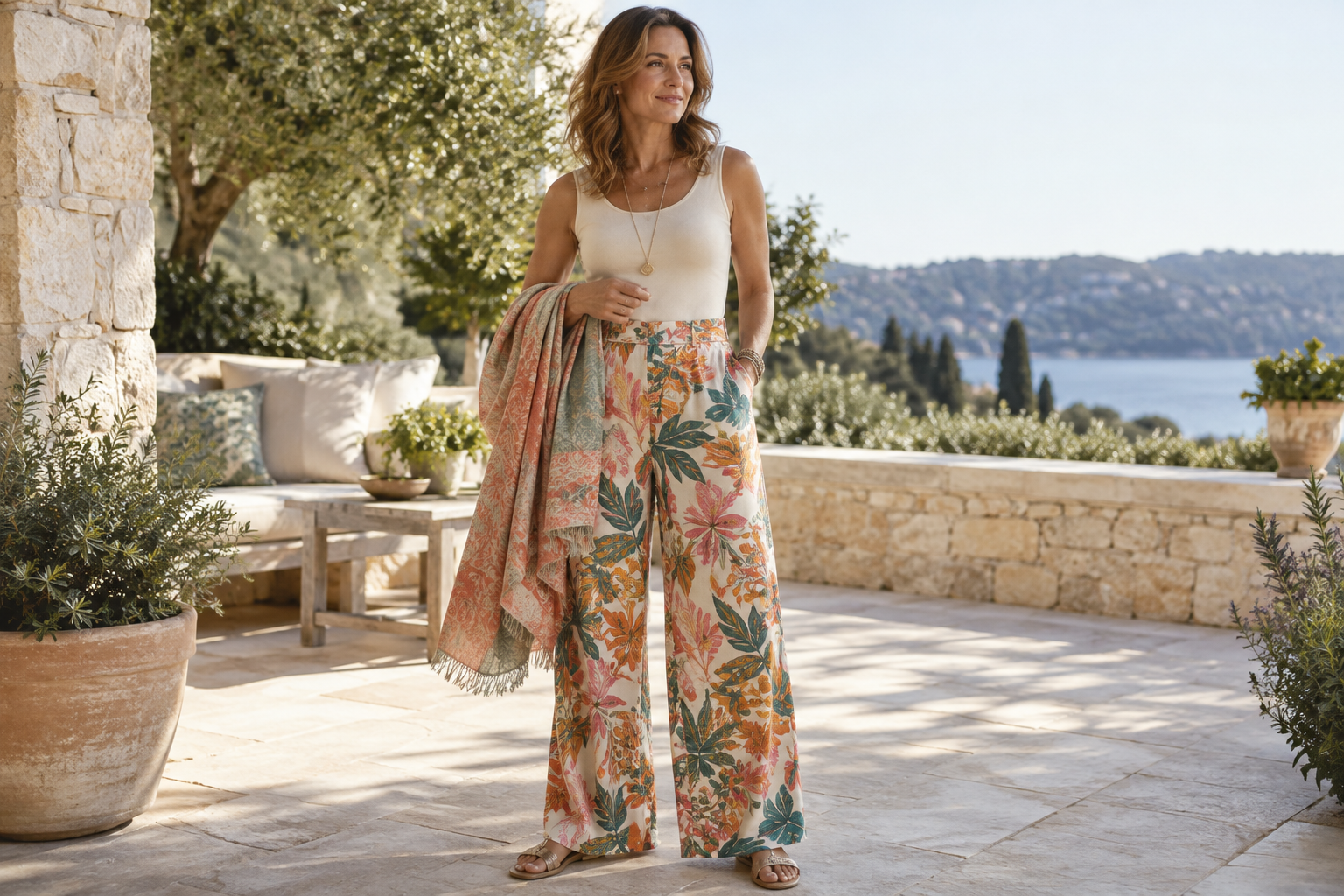
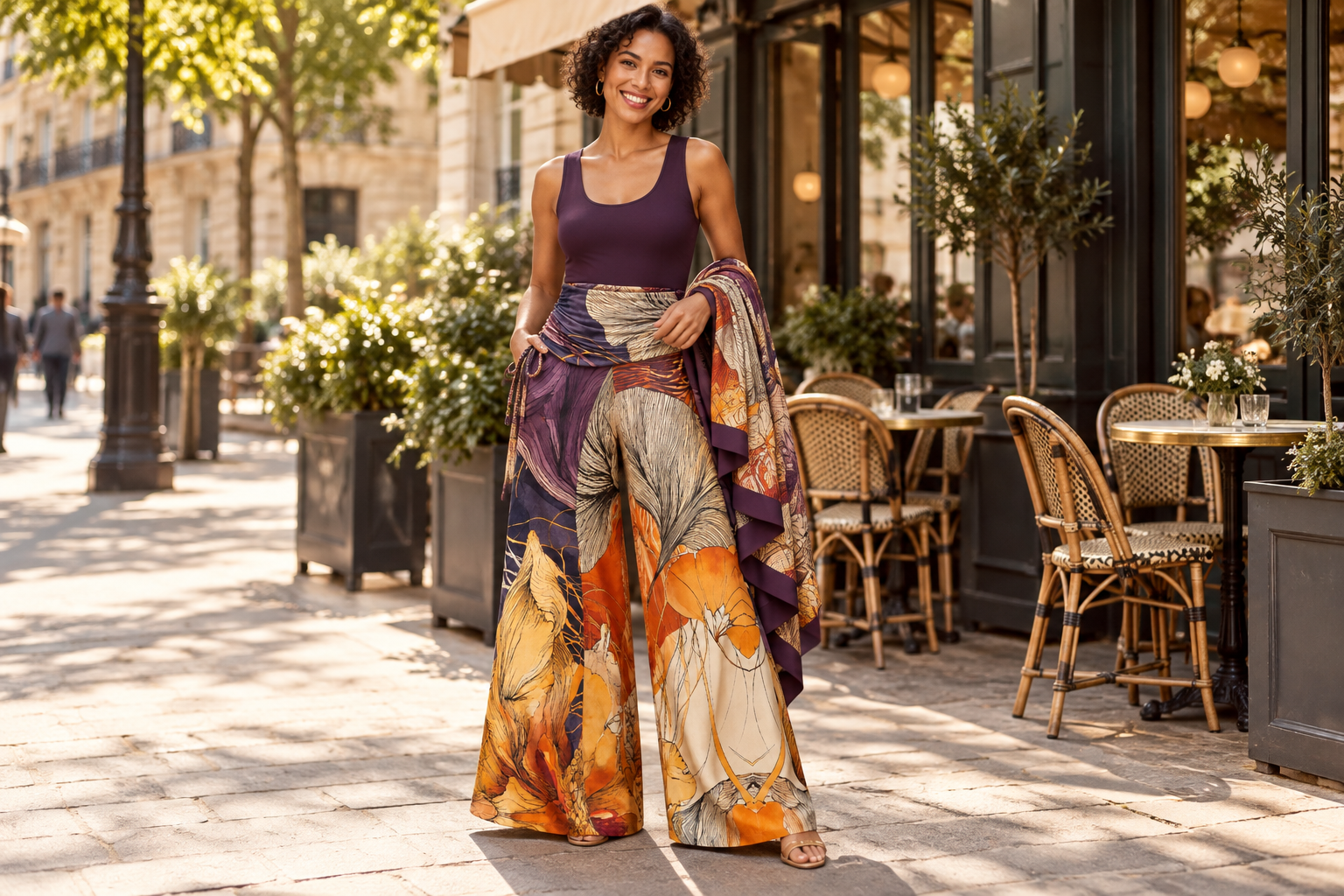
The same applies to trousers. If wide-leg trousers are your happy place, a coloured pair may feel easier than a bright fitted dress, even if the dress seems like the more obvious occasion outfit.
Comfort matters here. A waistband that digs in or a neckline you keep adjusting can make you feel exposed, whatever the colour. Before deciding that a shade is “too much”, check whether it’s actually the fit that’s bothering you.
Sit down, reach forward and walk around. Clothes should work when you’re living in them, not only when you’re standing still in front of a mirror.
Choose how much colour you want to see
There’s no minimum amount required. A little colour counts, and it doesn’t have to lead to anything bigger.
You might start with:
- A coloured vest peeping out beneath an open shirt.
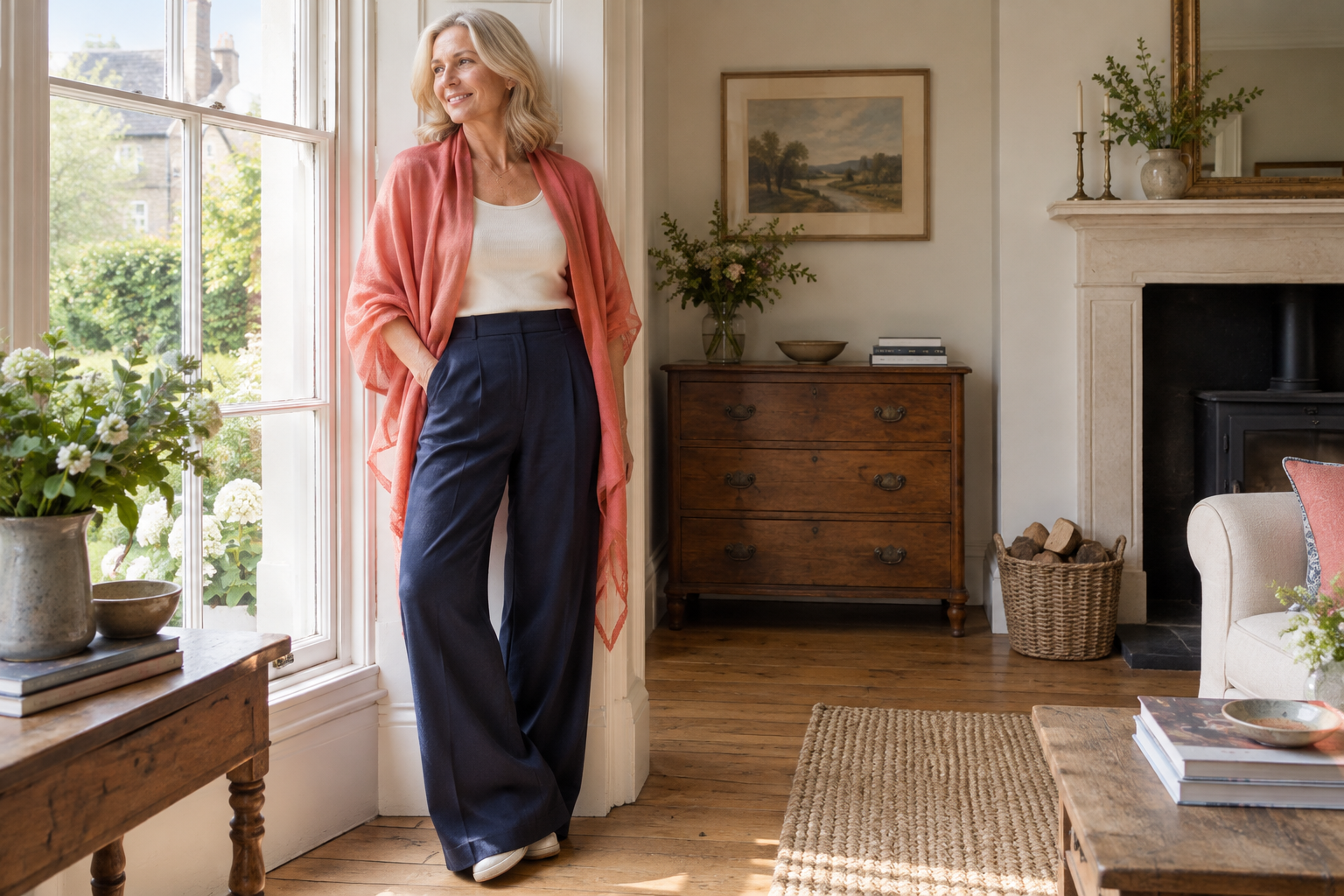
- A scarf or wrap over a familiar neutral outfit.
- Bright shoes with jeans and a plain knit.
- A colourful bag that doesn’t require you to rethink your clothes.
Placement makes a difference too. If a strong colour near your face feels distracting, try it in a skirt or trousers instead. If you love how a shade looks beside your face, bring it up into a neckline or collar.
A wrap is useful because you can adjust how much colour shows. With a reversible AK wrap, I like that you can choose which side takes the lead, or fold it to reveal just a little of the reverse. It’s an option, rather than a whole-outfit commitment.
Make pairing colours less complicated
You don’t need to memorise a colour wheel to get dressed. Start with a base you already trust, then add one colour and see whether you like the result.
A few combinations worth trying are:
- Navy and coral: an alternative to pairing every bright with black.
- Denim and green: easy to test with jeans and a shirt or knit.
- Cream and cobalt: a simple base that lets the blue stand out.
- Chocolate brown and pink: worth exploring if black feels too stark.
These aren’t rules, and the exact shades will change the effect. Use them as starting points with what’s already in your wardrobe.
Print offers another shortcut. Pick one colour from a patterned piece and repeat it elsewhere. A green detail in a kimono might give you the starting point for a top underneath; everything else can stay simple.
And if you enjoy wearing several colours together, you don’t need to appoint one neutral item to keep the peace.
Check colour in useful light
Changing-room lighting isn’t always the best judge of anything. If you can, look at a colour in indirect daylight before deciding how you feel about it.
Hold it near your face, then step back and look at the whole outfit. Do you like the overall effect? Does it work with the coat and shoes you’ll actually wear? A top can look lovely on its own but feel awkward with the rest of your wardrobe.
Try neighbouring shades too. If orange feels wrong, you might prefer terracotta or a softer peach. If a sharp yellow doesn’t appeal, mustard may be more your thing.
You don’t have to ban an entire colour because one version disappoints you. Equally, you’re allowed to dislike something without finding a technical explanation.
Give a new outfit an ordinary day
I wouldn’t save an unfamiliar outfit for an occasion where you already feel under scrutiny. Give it a quieter first outing: lunch, an errand, a casual afternoon with someone you feel at ease around.
Wear it for long enough to stop assessing it. Notice whether you’re comfortable moving about, whether the layers work and whether you still like it once you’ve left the mirror behind.
Repeating an outfit can help it become familiar. You don’t need to reinvent the styling each time; the combination that worked on Tuesday is still available on Saturday.
If someone comments on the colour, a simple “Thank you, I really liked it” is enough. You don’t owe anyone an explanation for stepping outside your usual palette.
Let confidence be quiet
For me, the aim isn’t to become the brightest person in the room. It’s to have more freedom when I open the wardrobe.
Some days that might mean pink. Other days it might mean navy from head to toe. Neither choice needs to say anything grand about who you are.
If there’s a colour you’ve been keeping for a more confident future version of yourself, try it with something comfortable this week. Keep the rest familiar. See how you feel.
You might find you’re already the person who wears it.
Rachel Branson
Designer and founder of Art Katsura. I travel often, review hotels and retreats, and design colourful reversible pieces made for a life well travelled.