Fashion for Women Over 40: Colour, Comfort and Your Own Style
Getting dressed after 40 needn’t involve a new rulebook. Here’s my practical guide to finding a good fit, enjoying colour and building outfits that feel like you.
By Rachel Branson · 13 November 2026
There’s something rather odd about the idea that turning 40 should suddenly change what we’re allowed to wear. Your birthday doesn’t make a favourite print unsuitable, or mean you must replace everything with sensible beige.
What can change is what you want from your clothes. Perhaps you’re dressing for a different working life, your shape has shifted, or you simply have less patience for waistbands that dig in. All perfectly good reasons to rethink a wardrobe — without abandoning your personality.
My approach to fashion for women over 40 is straightforward: start with your actual life, pay attention to fit and leave room for colour and enjoyment.
Start with your week, not a shopping list
Before buying anything, think about where your clothes need to take you. A wardrobe for commuting and client meetings will look different from one built around working at home, walking and occasional evenings out.
I’d start by choosing three outfits you already enjoy wearing. What do they share? Perhaps it’s a relaxed trouser shape, an open neckline or a particular colour combination. Those details are useful clues.
Then identify the gaps:
- Do you have lovely tops but no comfortable trousers to wear with them?
- Are your everyday shoes limiting your outfits?
- Is everything either very casual or saved for an occasion?
- Do you need a light layer that works indoors and outside?
Buy for the missing connection, rather than another version of something you already own.
Get the fit right for the body you have now
If your measurements have changed, clothes should accommodate that. You don’t need to squeeze into an old size or wait for a different body before dressing well.
Check size guides when shopping online, and compare garment measurements where available. A size label tells you much less than how something feels when you sit down.
In the fitting room, try this little routine:
- Sit, bend and reach forwards. Notice pulling across the back, hips or thighs.
- Check that buttons lie comfortably rather than gaping.
- Look at pocket openings: flaring can suggest you need more room or a different cut.
- Try trousers with the shoes you’ll actually wear. Hems should clear the ground without catching underfoot.
Small alterations can make an existing piece more useful. Shortening a hem or adjusting a waistband may be worth considering; complicated changes to shoulders or jacket structure deserve a tailor’s advice first.
Use shape as a guide, not a set of restrictions
Body-shape labels can offer a starting point, but most of us don’t fit neatly into one category. I find it more helpful to ask where you want definition and where you want ease.
If you enjoy emphasising your waist, try a wrap dress, a gently shaped jacket or a belt over a loose dress. If belts feel restrictive, an open shirt or jacket can give an outfit structure without fastening at the middle.
If your hips need more room than your waist, look for trousers that fit comfortably through the hips first, then investigate whether the waist can be adjusted. Wide legs and A-line skirts are options, not obligations.
For a straighter outline, pleats, textured fabrics or a tucked-in top can add definition if that’s what you want. Equally, a loose, straight dress can look wonderful without creating curves.
With fuller silhouettes, experiment with the top length. A shorter top, a small front tuck or an open layer may change the proportions enough to make the outfit feel right. There’s no need to make every piece fitted.
Make comfort part of the outfit
Comfort isn’t a consolation prize. It’s much easier to enjoy what you’re wearing when you aren’t constantly adjusting it.
Look beyond whether a fabric contains stretch. A non-stretch trouser with enough room can feel better than a tight stretchy pair. Check seams, waistbands, lining and whether the fabric feels pleasant against your skin.
If you tend to get warm, removable layers are useful. Cotton and linen can be good starting points, but weight and weave matter too: a dense fabric may feel warmer than you expect.
Shoes deserve the same attention. Try loafers, trainers, sandals or low block heels with your clothes rather than assuming an outfit needs height. Check toe room, heel security and cushioning, and don’t rely on painful shoes becoming comfortable later.
Wear colour and print on your terms
I’m always going to make a case for colour. But that doesn’t mean you need a head-to-toe bright outfit to enjoy it.
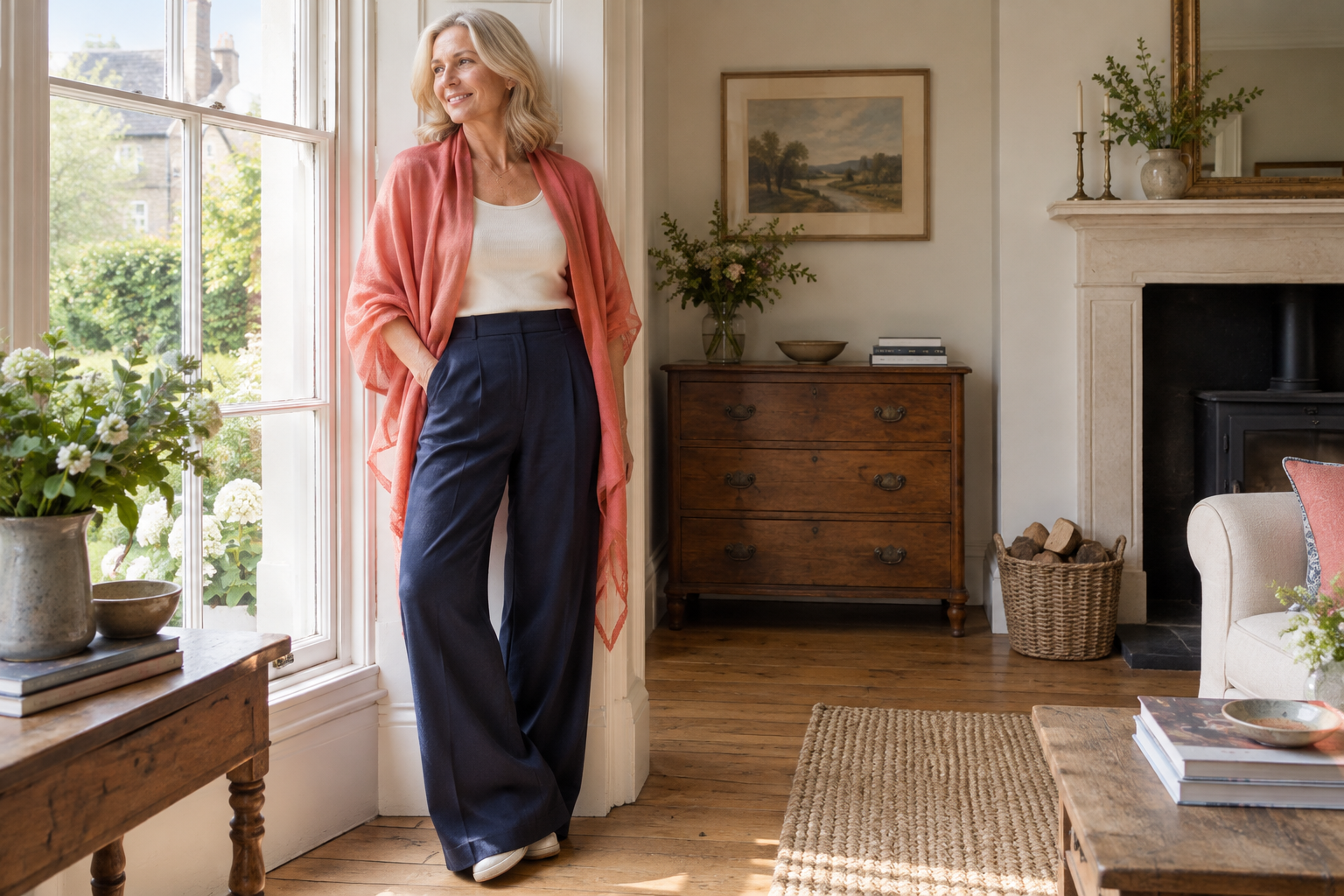
Start with one colour you love and repeat it alongside familiar neutrals: turquoise with navy, coral with cream, or pink with chocolate brown. A colourful wrap is an easy experiment because you can add or remove it without changing the whole outfit.
If a once-favourite shade no longer appeals near your face, compare alternatives in daylight. Hold each fabric beneath your chin, away from strongly coloured surroundings. Which makes you feel more comfortable and more yourself? There’s no universal palette for a particular age or skin depth.
Print follows the same principle. Small patterns aren’t automatically more flattering than large ones. Contrast, spacing and garment shape all affect the result.
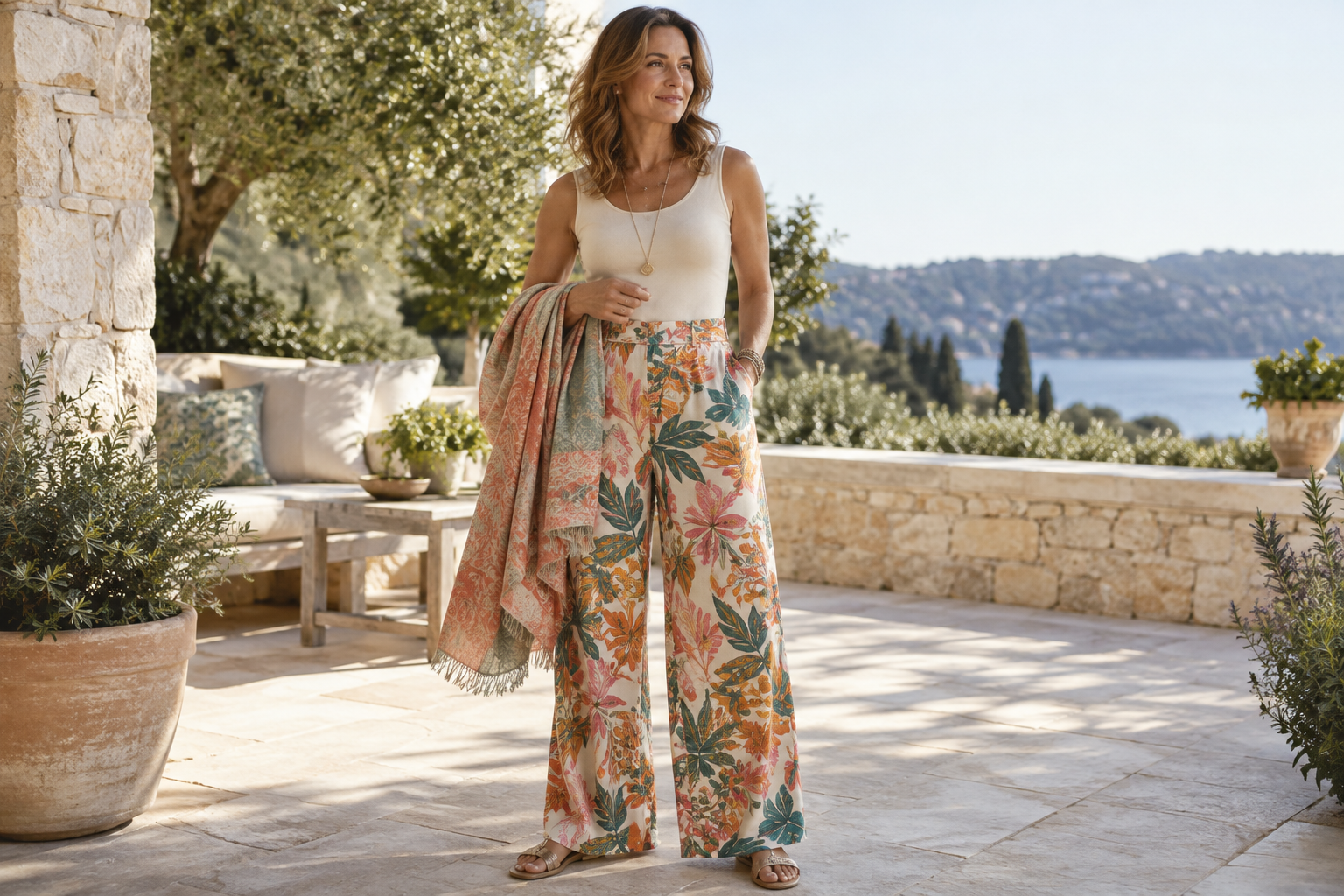
For an easy combination, pick one colour from a printed piece and repeat it in a plain top or trousers. If you prefer mixing patterns, start with a shared colour so there’s something connecting them.
Build a small collection of useful pieces
A wardrobe staple earns its place by being worn, not by appearing on somebody else’s essentials list. My starting suggestions would be:
- Comfortable everyday trousers: straight-leg, tapered or wide-leg, depending on your preference.
- A few reliable tops: necklines and sleeve lengths you enjoy, in colours that work together.
- An adaptable layer: a cardigan, blazer, overshirt or short kimono.
- One easy all-in-one outfit: a dress or jumpsuit, if you like wearing them.
- Shoes for your real routine: including a pair you can comfortably walk in.
- Something expressive: a print, bright layer or piece of jewellery that feels unmistakably yours.
In the AK Collection, I design wide-leg trousers in prints and plain colours because both can be useful: one can lead an outfit, while the other works quietly with pieces you already have.
Our pieces are made to order in the UK, but whatever label you choose, check measurements, care instructions and how a new item will fit into your wardrobe before ordering.
Try these easy outfit combinations
When getting dressed feels unnecessarily complicated, a simple formula helps.
For everyday plans: straight-leg jeans, a soft shirt and loafers or trainers. Roll the sleeves if you like, and add a colourful bag or earrings.
For relaxed workwear: plain palazzo trousers, a simple top and a softly structured jacket. Check the trouser length with your usual work shoes.
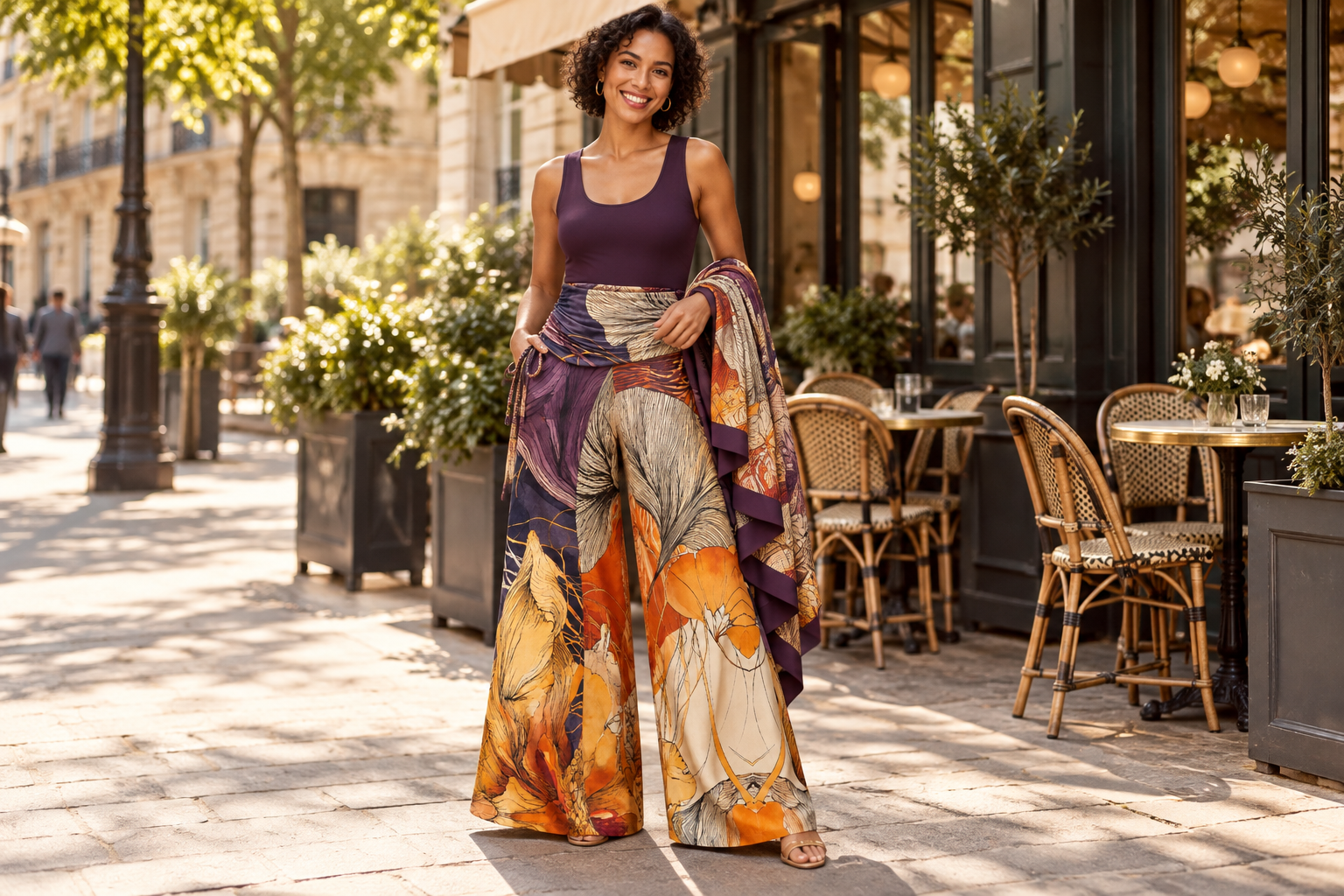
For lunch or an evening out: printed trousers with a plain top in one of the print’s colours. Add comfortable sandals and a light layer rather than changing the entire outfit.
For travel: relaxed trousers, a breathable top and a reversible wrap for changing temperatures. Some of the wraps have a printed side and a plain reverse, giving you two different looks from one layer.
FAQs
What should women stop wearing after 40?
Nothing purely because of age. Short skirts, bikinis, bright prints and distressed denim are personal choices. I’d retire clothes that hurt, don’t fit your life or no longer feel like you — not clothes that break an imaginary age rule.
How can I look current without following every trend?
Try one change at a time: a different trouser shape, an updated shoe or a fresh colour combination. Wear it with familiar favourites. You don’t need to replace a whole wardrobe to make it feel refreshed.
What can I wear if I prefer more room around my middle?
Look for tops that skim comfortably, dresses with gentle shaping and trousers with a waistband that feels good sitting down. An open shirt can add a light layer without clinging. Choose room and movement rather than automatically going several sizes larger.
Can I wear wide-leg trousers with flat shoes?
Absolutely. Try trainers, loafers or sandals, then check the hem with that particular pair. It should stay off the ground. If the combination feels too loose overall, experiment with a shorter top or small front tuck.
How do I update my wardrobe on a budget?
Begin with what you own: try new combinations, photograph the outfits you like and identify one genuine gap. Repairs, alterations and second-hand finds can help. Above all, choose clothes you’ll happily wear now, rather than saving them for an imagined future.
Rachel Branson
Designer and founder of Art Katsura. I travel often, review hotels and retreats, and design colourful reversible pieces made for a life well travelled.