Fashion for Women Over 30: A Wardrobe That Feels Like You
Good style doesn’t come with an age limit. Here’s my practical guide to finding your fit, enjoying colour and building a wardrobe that works for your everyday life.
By Rachel Branson · 13 November 2026
Turning 30 doesn’t mean you suddenly need a different wardrobe. There’s no birthday deadline for bright colours, short skirts or your favourite jeans. But it can be a useful moment to ask whether your clothes still suit the life you’re actually living.
My approach to fashion for women over 30 is simple: keep the personality, get fussier about comfort and fit, and stop buying things that need an imaginary occasion.
Whether you’re refining your style or feeling a little stuck, here’s how I’d make getting dressed easier without making it boring.
Start with your week, not a shopping list
Before deciding what’s missing, look at where you spend your time. A wardrobe for commuting and client meetings will need different things from one built around working at home, school runs or frequent travel.
Write down your usual activities, then check whether you have a comfortable outfit for each. Include the less glamorous bits: walking to the station, sitting at a desk and getting caught in a shower.
Next, pull out five pieces you wear repeatedly. What do they share? Perhaps they’re soft at the waist, colourful, easy to wash or brilliant with flat shoes. Those details tell you more about your personal style than a trend forecast.
I’d also make a small alterations pile. Trousers that need hemming aren’t necessarily a shopping problem; they might just need a visit to a tailor.
Choose wardrobe staples you’ll genuinely wear
A staple is something useful to you, not something every woman is supposed to own. You don’t need a little black dress if you dislike black, or a blazer if you always feel uncomfortable in one.
These are helpful starting points rather than a compulsory checklist:
- An easy jacket: A blazer adds definition, but a soft jacket or neat cardigan might suit your routine better. Check that you can reach forwards comfortably.
- Jeans you can sit down in: Choose your preferred rise and leg shape. Dark denim can feel dressier, but the best pair is the one you actually reach for.
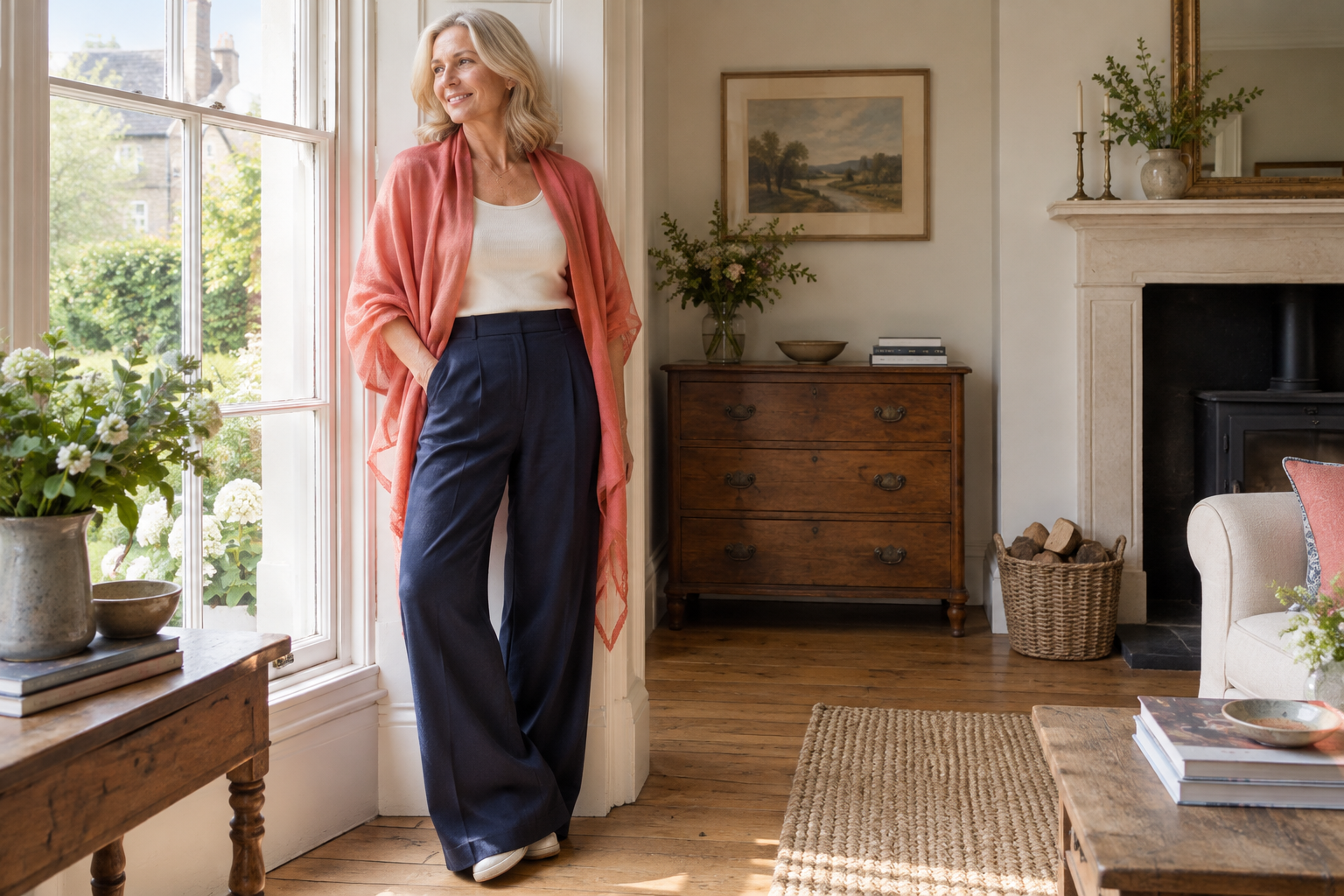
- Comfortable trousers: Straight-leg or wide-leg styles can work across casual days, offices and evenings, depending on the fabric and styling.
- A dress or separates for invitations: A versatile dress is handy, but trousers and a beautiful top can do the same job.
- Reliable tops: Look for necklines you enjoy and fabrics that work under your usual layers.
- Shoes for your real journeys: Flats, trainers, boots or heels all have a place if they fit your feet and your day.
Build slowly. One well-chosen piece that works with three existing outfits is more useful than a collection of lovely things with nothing to wear them with.
Make fit your first styling tool
Before deciding that a style ‘doesn’t suit you’, check the fit. A pulling waistband or awkward shoulder seam can make an otherwise lovely garment feel wrong.
When trying something on, sit, bend and walk. Raise your arms in a blouse. Put your phone in the pockets. Try trousers with the shoes you intend to wear, checking that the hem doesn’t drag or catch under your heel.
Body-shape labels can be a starting point, but I wouldn’t let them become instructions. Bodies rarely fit neatly into one category, and you don’t need to disguise yours.
Instead, think about the effect and feeling you want:
- To define your waist: Try a wrap fastening, a belt or a gently tucked top. Check that it still feels comfortable when seated.
- For more room through the middle: Look for fabric that falls freely rather than pulling. An open shirt or jacket can add a light layer without cinching.
- If your hips and waist need different sizes: Fit the fuller area first, then ask whether the waist can be altered. Don’t size down just to close a waistband gap.
- To add shape to a straighter silhouette: Try pleats, texture or a belted layer, if that’s the look you enjoy.
Wide-leg trousers aren’t reserved for one body shape. The rise, fabric, waistband and length usually matter far more than a label such as ‘pear’ or ‘rectangle’.
Let colour and print do some of the work
Colour is a big part of how I design, and I don’t believe it needs to become quieter as we get older. If you love a vivid pink or a bold print, there’s no reason to retire it.
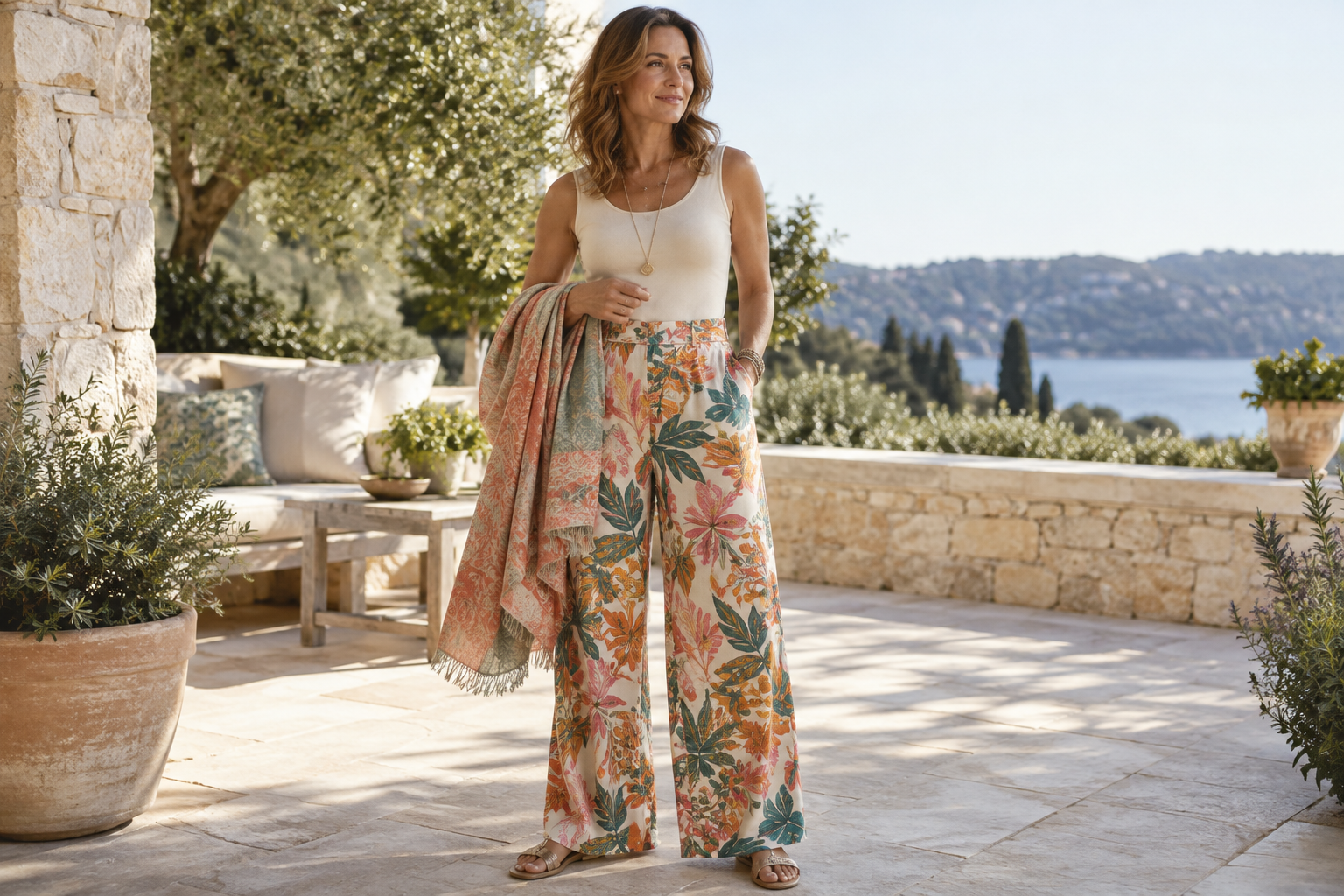
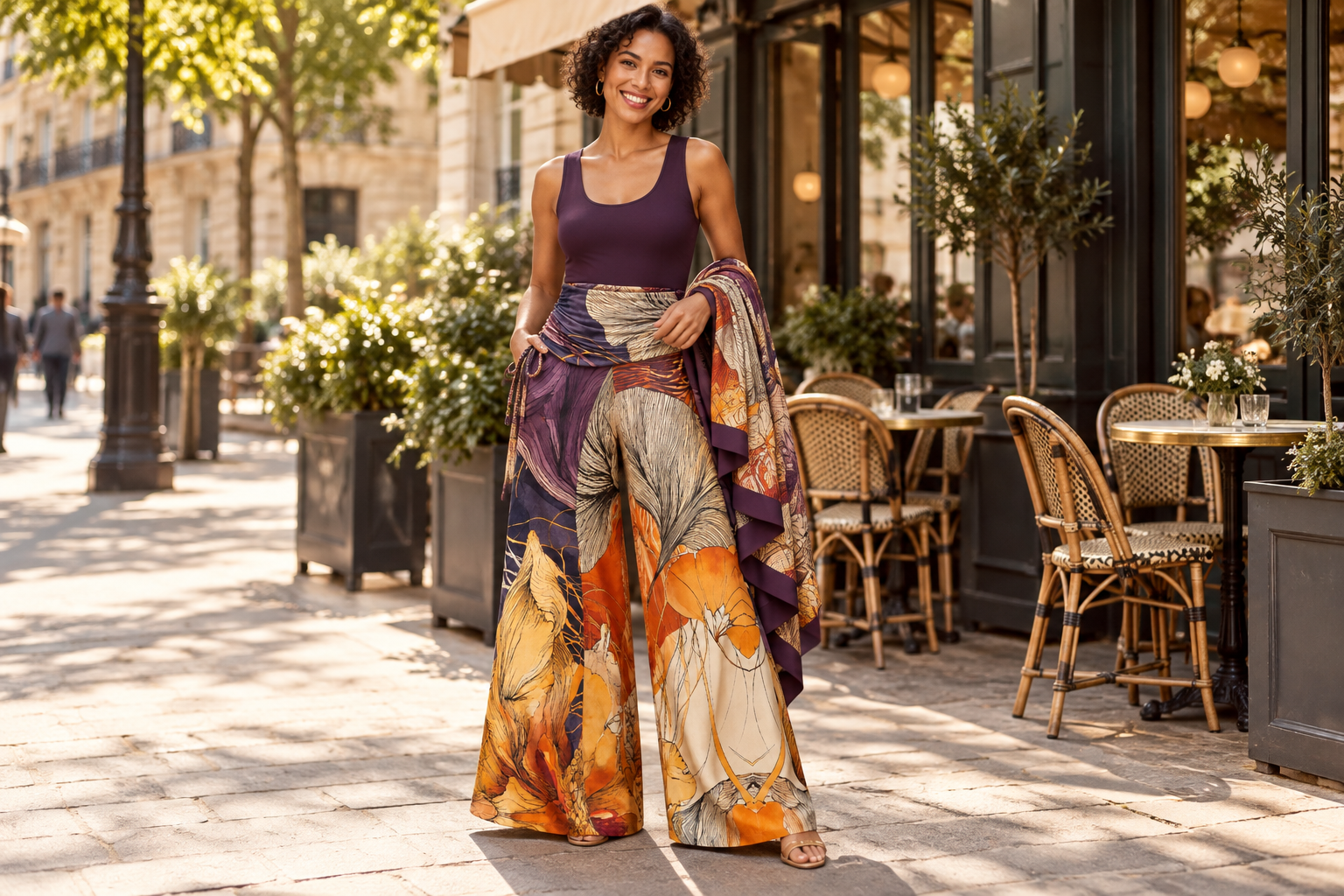
For an easy starting point, choose one colourful piece and repeat a shade from it elsewhere. Printed trousers with a plain top in one of the print’s colours feel considered without much effort.
If a full outfit feels like too much, try colour in a wrap, bag or earrings. Some of my reversible AK designs have a printed side and a plain side; the wraps offer a way to change the feel of an outfit without packing another layer.
Finding colours you enjoy near your face takes a little experimenting. Skin depth alone doesn’t tell you which shades you’ll like best.
Hold different colours beneath your face in indirect daylight. Compare warm coral with cool pink, or cream with bright white. Notice which makes you feel most comfortable and lively. There’s no need to turn it into an exam.
The same goes for print scale. Small florals aren’t automatically more suitable than large graphic patterns. Try both from a few steps away, not just close to the mirror.
Have a few outfits ready to go
I like an outfit formula: a combination you know works, with room to change the colours or accessories. It saves time without making every day look identical.
For everyday plans: Jeans, a soft top and an open shirt or jacket. Add trainers or flat boots depending on the weather.
For work or a smart lunch: Wide-leg trousers, a simple blouse and loafers. If your workplace is more formal, add a tailored jacket and choose fabrics that hold their shape.
For dinner: Printed palazzo trousers, a plain top and earrings. My AK wide-leg trousers come in prints and plain colours; I’d let the print lead and keep the rest simple when I want an easy combination.
For a weekend away: Comfortable trousers, a breathable top, walking shoes and a wrap for changing temperatures. Check the forecast rather than relying on a pretty packing list.
Take a quick photo when an outfit feels good. A little album on your phone is surprisingly helpful on mornings when inspiration has gone missing.
Spend on usefulness, not promises
A higher price doesn’t automatically mean better quality. Check the stitching, whether seams lie flat, how fastenings work and whether the care instructions fit your routine.
With made-to-order clothing, including the AK pieces we make in the UK, read sizing, lead times and returns information before ordering. Made to order doesn’t necessarily mean made to your individual measurements.
For trends, I’d ask: do I like this on me, and can I wear it with what I own? Borrowing or buying second-hand can be a useful way to experiment.
You don’t need to ban playful clothes to build a practical wardrobe. Just leave room in the budget for the everyday pieces you wear most.
FAQs
What should women stop wearing after 30?
Nothing purely because of age. Short hems, distressed denim and low-rise jeans are personal choices, not mistakes. I’d reconsider clothes that hurt, need constant adjusting or no longer feel like you, rather than following an age-based banned list.
How can I look polished without feeling overdressed?
Start with comfortable clothes that fit well, then add one deliberate detail: a jacket, earrings or a neat pair of shoes. Clean footwear, steamed fabric and a hem that sits properly often do more than adding extra accessories.
Can I wear bright colours and bold prints in my thirties?
Absolutely. Start with one statement piece if that feels easier, or wear colour head to toe if you love it. Repeating one shade across your outfit can help different pieces feel connected, but neutrals aren’t compulsory.
Which wardrobe basics should I buy first?
Start with your biggest everyday gap. That might be comfortable trousers, a useful jacket or shoes you can walk in. Buy for repeated wear, and check that each addition works with clothes you already own before chasing a complete capsule wardrobe.
How do I find my personal style if it keeps changing?
Choose three words for how you want to feel, such as relaxed, colourful and put-together. Use them as a loose guide when trying clothes. Your style can change with your work, body or interests; it doesn’t need to become a permanent uniform.
The aim isn’t to look a particular age. It’s to open your wardrobe and find clothes that feel good, work together and leave you free to get on with your day.
Rachel Branson
Designer and founder of Art Katsura. I travel often, review hotels and retreats, and design colourful reversible pieces made for a life well travelled.