Flattering Fashion for Your Tummy: Dressing to Feel Good
Comfortable waistbands, lovely drape and a splash of colour: my practical guide to dressing your midsection without treating your tummy as something to fix.
By Rachel Branson · 12 November 2026
If you’ve ever tried on an outfit and spent the next five minutes pulling the fabric away from your tummy, you’ll know how distracting uncomfortable clothes can be. Sometimes it’s the cut. Sometimes it’s the waistband. Often, it simply isn’t the right garment for you.
I don’t think getting dressed should involve pretending we haven’t got a midsection. A tummy is normal, and wanting a little more coverage is perfectly normal too.
For me, flattering fashion means clothes that feel lovely, sit comfortably and let you get on with your day. Here’s how I’d approach dressing your tummy, without a list of things you’re supposedly not allowed to wear.
Start with fit, not the size label
Before changing your style, check whether your clothes have enough room where you need it. A top that pulls across the stomach or trousers that pinch when you sit can make you much more conscious of your middle.
Going larger isn’t always the answer, either. If the shoulders slip and the neckline gapes, you may need a different cut rather than a different size.
My fitting-room check is simple:
- Sit down: does the waistband dig in or fold over?
- Reach forwards: does the top pull tightly across your middle?
- Walk around: do hems ride up or pockets flare open?
- Relax your stomach: can you breathe normally without adjusting anything?
Choose clothes for your body as it is today. There’s no prize for tolerating a waistband that makes lunch uncomfortable.
Look for shapes that skim rather than grip
A little space between fabric and skin can give you the coverage you want without hiding your whole shape. The useful distinction is between a garment that falls freely and one that feels oversized everywhere.
A-line dresses and skirts widen towards the hem, leaving room around the tummy and hips. Look for a waist seam that feels comfortable rather than landing on a spot you’d rather not emphasise.
Empire-line dresses have a seam beneath the bust. They can be lovely when the fabric falls softly from there. Check that the seam actually sits below your bust and that the gathers don’t create more volume than you enjoy.
Wrap dresses and tops let you adjust the fit. A side tie can be an attractive detail, although it’s worth sitting down to check the neckline and skirt overlap stay secure. A fixed faux-wrap style offers a similar look without a movable fastening.
Tunics and relaxed shirts offer extra length. Side splits can help the fabric move over your hips rather than catching. Try different lengths: a hem ending at the widest part of your hips may sit differently from one just above or below it.
None of these shapes belongs to a particular body type. Trying them on tells you far more than a label such as ‘apple’ or ‘pear’.
Find your comfortable waistband
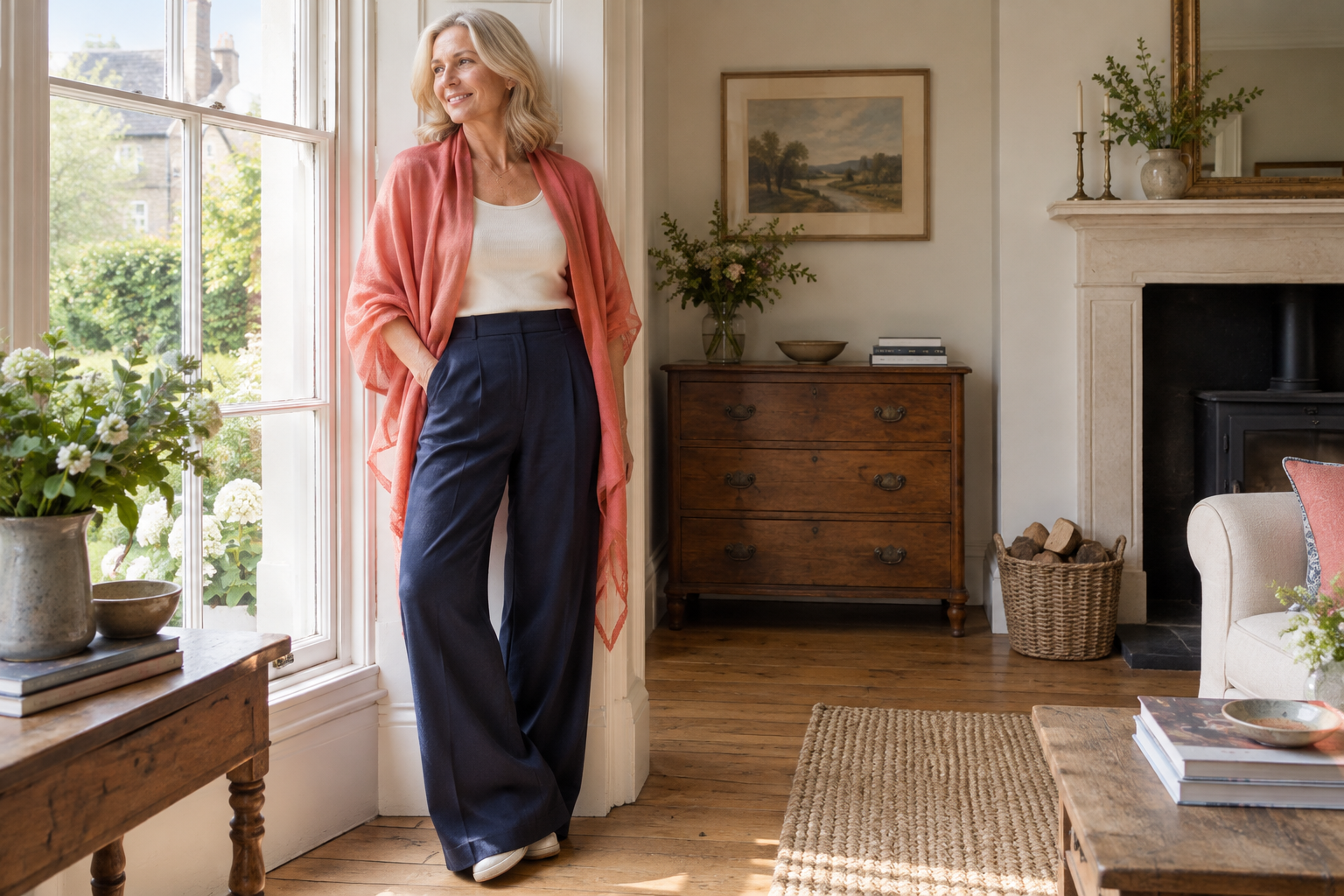
High-waisted trousers can feel secure and give coverage across the lower tummy, but the highest rise isn’t automatically the best. If you have a shorter torso, a mid-rise might be more comfortable when seated.
Look for a waistband that lies comfortably against you without squeezing. Elastic can be wonderfully forgiving, although narrow, firm elastic may dig in. A flat front with an elasticated back is another option worth trying.
With pleated trousers, check that the pleats hang as intended rather than pulling open across your stomach. With pockets, watch for gaping: it can mean you need more room through the front or hips.
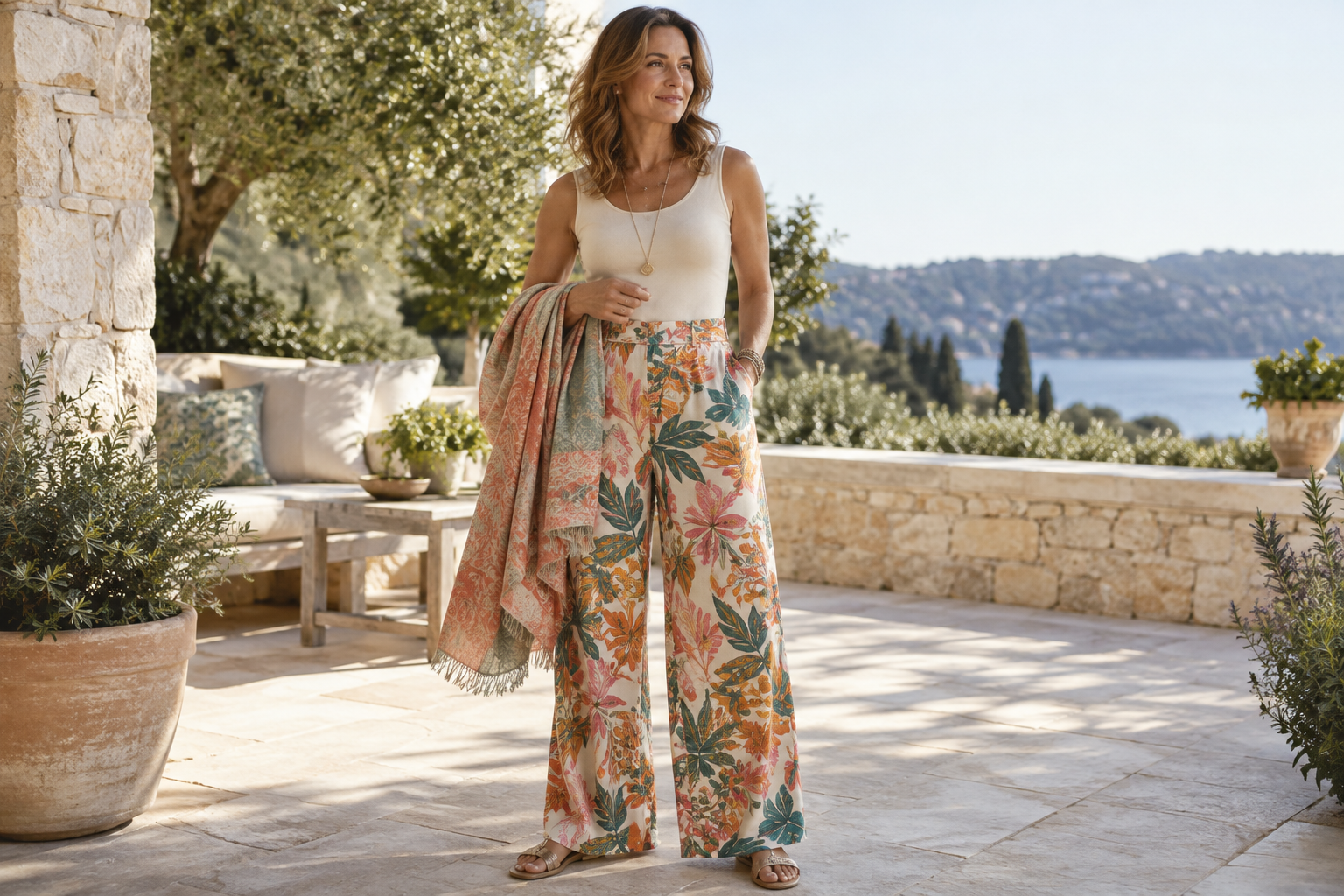
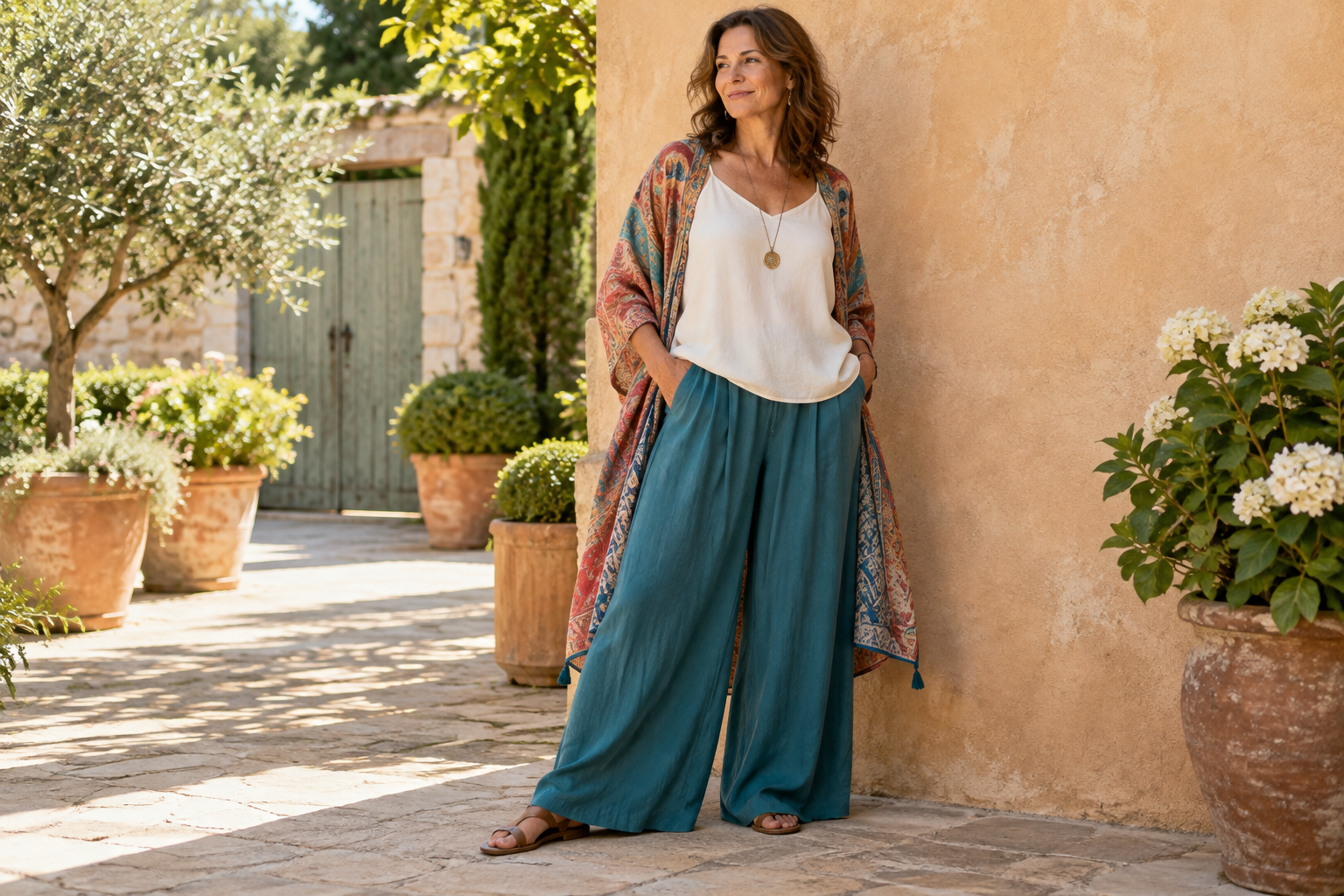
I like wide-leg trousers for the way they bring movement to an outfit. The AK Collection includes printed and plain palazzo trousers, so you can choose whichever feels most like you. The important bit is getting the fit right through the waist and hips, not simply choosing a wider leg.
Pay attention to the fabric, not just the fibre
Two tops with similar shapes can sit completely differently because of their fabric. Weight, weave, stretch and finish all affect how a garment falls.
A very fine jersey may follow every contour, while a weightier jersey can skim beautifully. Cotton can be crisp or soft; silk can float or cling. I wouldn’t rule out a whole fabric family.
When trying something on, look for:
- Enough weight to fall smoothly, rather than catching on underwear.
- Comfortable movement, so the garment doesn’t pull when you sit.
- A finish you enjoy, remembering that shiny surfaces can make folds more noticeable.
- Thoughtful gathers or ruching, which add texture without creating unwanted bulk.
Check in daylight if possible. A fabric that looks opaque in a dim changing room may feel rather different beside a sunny window.
Use colour and print because you enjoy them
You don’t have to dress in black to feel good about your tummy. Navy, charcoal and deep green are lovely options if you like them, but bright colour isn’t reserved for particular shapes.
Wearing a top and trousers in similar tones can create a continuous line. They needn’t match exactly: soft blue with navy or cream with warm beige can work nicely.
Print is personal, too. An all-over pattern can make individual folds less noticeable, while a single motif might draw your eye to its placement. Neither large nor small prints are automatically better. Look at the whole garment on your body, not just the pattern on the hanger.
I’d start with a colour that makes you smile, then consider the fit. A cheerful print you love is far more useful than a supposedly flattering plain top you never reach for.
Add layers and accessories with intention
An open shirt, short kimono or softly tailored jacket can give an outfit definition without fastening across your middle. Check where the hem finishes and whether the layer hangs freely over the clothes underneath.
I also like the flexibility of the wraps. AK reversible travel wraps offer two styling options in one piece, with some printed on one side and plain on the other. Draping one loosely over your shoulders adds colour without needing a tight tie around your waist.
A belt is optional. Try a loose tie slightly above your natural waist, or a narrower belt over a dress, and see whether you enjoy the effect. If it feels fussy or restrictive, leave it off.
Earrings, a necklace or a bright scarf can bring attention towards your face. Think of them as highlighting something you love, rather than distracting anyone from your body.
Three easy outfit combinations to try
For everyday: straight or wide-leg trousers, a soft top and an open shirt. Try the top untucked first, then a small front tuck if you want more definition. Neither is compulsory.
For lunch or an evening out: an A-line or wrap dress with earrings and comfortable shoes. Check the dress while seated so you know the waist and skirt still feel good at the table.
For travelling: relaxed palazzo trousers, a breathable top and a reversible wrap for changing temperatures. Keep the waistband comfortable enough for sitting, and make sure the trouser hems won’t trail under your shoes.
FAQs
What can I wear if I want less emphasis on my tummy?
Try a softly skimming top, an A-line dress or trousers with a comfortable rise. An open layer can add definition without clinging. Start with fit and fabric rather than buying everything a size bigger.
Can I wear fitted clothes with a noticeable tummy?
Absolutely. A fitted dress or close-cut top isn’t off limits. If you’d like a softer outline, try a weightier fabric, gentle ruching or an open jacket. Those are options, not requirements.
Should I tuck my top in or leave it out?
Try both with the actual trousers or skirt you’re wearing. A small tuck can show the waistband without gathering lots of fabric around your middle. An untucked top works well when its hem falls freely rather than catching.
Do I need shapewear for a smooth silhouette?
No. Well-fitting everyday underwear may be all you want. If you enjoy shapewear, choose the correct size and check that you can breathe, sit and move comfortably. It should never be painful or something you feel obliged to wear.
What helps when my waist size changes during the day?
Adjustable ties, comfortable elastic and a little extra room can help when your usual waistband feels restrictive. Test clothes seated as well as standing. I’d always choose an outfit that accommodates those changes over one that needs constant adjusting.
Rachel Branson
Designer and founder of Art Katsura. I travel often, review hotels and retreats, and design colourful reversible pieces made for a life well travelled.