One Reversible Wrap, Five Easy Ways to Wear It
Over your shoulders, under a belt or loosely looped for the journey: five practical ways to make a reversible wrap feel like a different piece each time.
By Rachel Branson · 16 November 2026
I like clothes that give you options without giving you homework. A reversible wrap is a lovely example: one piece, two sides, and several ways to change the feel of what you’re wearing.
The trick isn’t learning elaborate knots. It’s deciding where you want the fabric to sit, how much coverage you need and which side works with the rest of your outfit.
These five ideas start with clothes you may already own: a simple top, trousers, a dress or swimwear. No special occasion required, and no need to get every fold perfectly straight.
Before you start: get to know your wrap
Wraps vary in size, shape and weight, so treat these suggestions as starting points rather than rules. A generous rectangle will behave differently from a shaped wrap, and thicker fabric may be lovely over your shoulders but too bulky around your waist.
Open yours out first. Notice its length, where the edges fall and whether it has any fastenings or a particular intended shape. Follow its care and wearing guidance, especially before adding a belt or trying a knot.
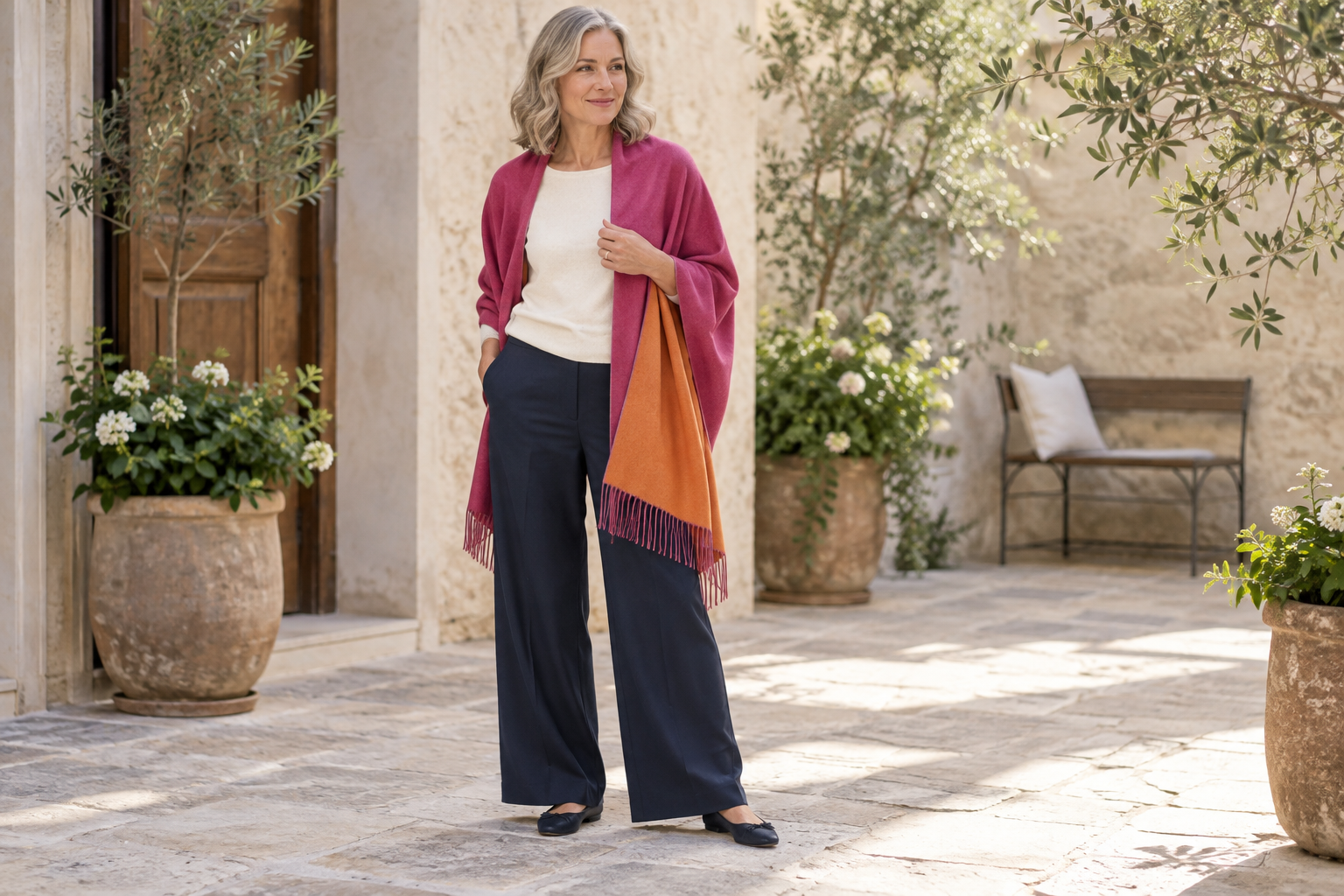
Then choose your outward-facing side. I’d start with whichever colour picks up something in your outfit, even if that’s just a shoe or an earring. Turn back a little of the edge to let the reverse show. That small contrast can do quite a lot.
1. The easy shoulder drape
This is the simplest option, and often the nicest when you want to see the fabric properly.
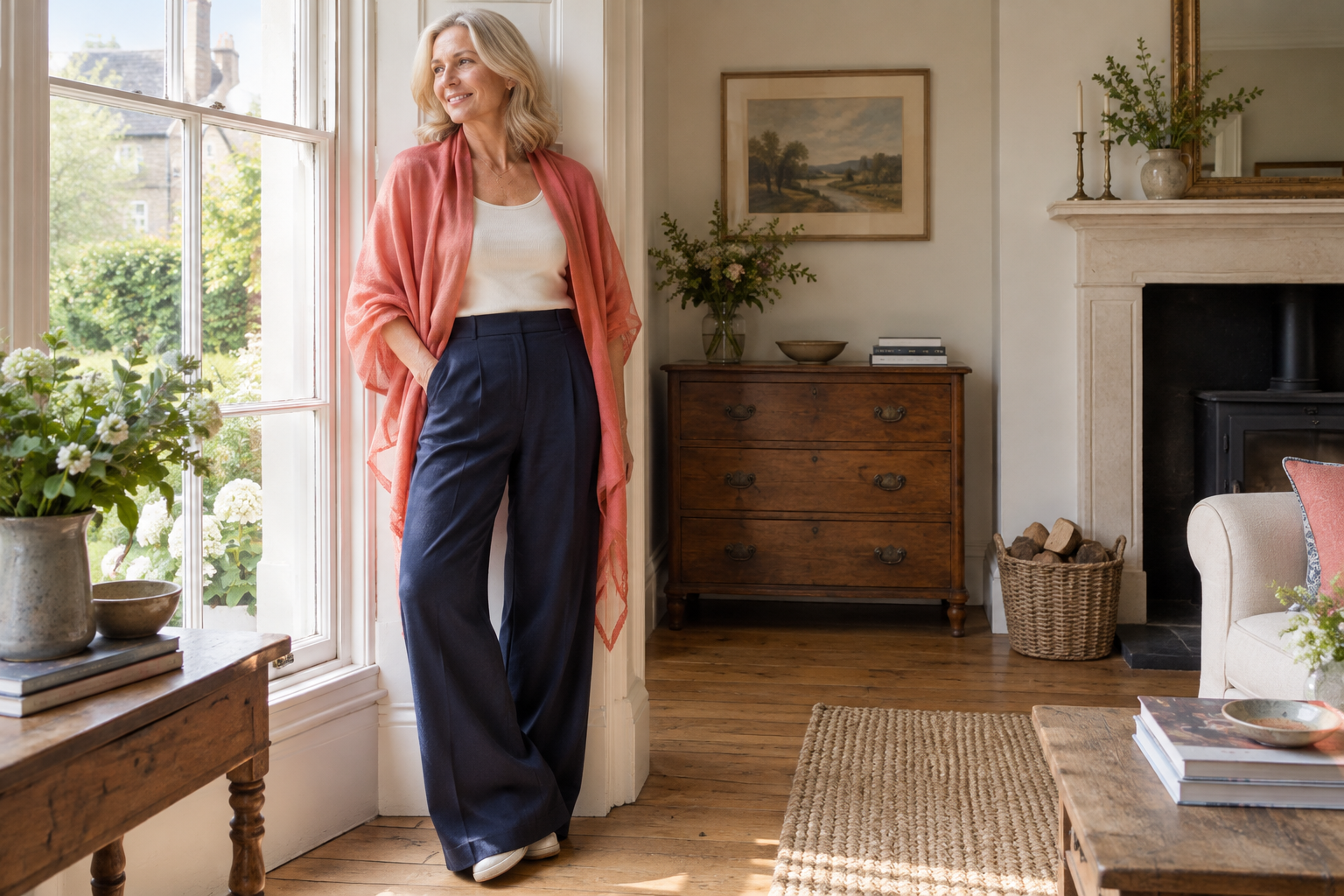
Centre the wrap across your upper back and bring both ends forward over your shoulders. Let them hang loosely, then fold the top edge back slightly to reveal the reverse near your face.
Try it over a plain T-shirt and straight-leg jeans, or a simple dress. Keeping the layer underneath fairly uncomplicated lets the wrap bring the colour without making the whole outfit feel busy.
If you’re wearing wide-leg trousers, a neater-fitting top can help balance the volume. That doesn’t have to mean tight; just something that isn’t adding another generous layer underneath.
Practical tip: check the hem before heading out. If the ends catch your hands or trail near the ground, fold the wrap lengthways to shorten the drop. This is a relaxed drape, so expect to readjust it occasionally rather than relying on it to stay put in wind.
2. The softly belted layer
A belt changes the outline without needing to knot the wrap itself. It’s useful when you like a loose layer but want a little definition at the front.
Drape the wrap evenly over your shoulders, leaving the front open enough to show your top. Place a belt around your waist, over the two hanging front panels but underneath the loose fabric at the back. That leaves the back free rather than gathering everything into a bundle.
Gently pull a little fabric above the belt so you can move comfortably. Turn one front edge out to show the reverse if you’d like an asymmetric detail.
I’d pair this with a simple long-sleeved top and trousers, or a straight-cut jersey dress. A plain belt is usually enough; it doesn’t need to compete with the print.
Practical tip: sit down and reach forward before you leave. If the wrap pulls at your shoulders or the belt feels restrictive, loosen it. With very thick fabric, skip the belt rather than trying to force the look.
3. The loose travel scarf
For a train journey, a breezy walk or a chilly indoor space, a wrap can sometimes take the place of a generous scarf. This works best with a soft, reasonably lightweight rectangle.
Fold it lengthways into a broad band, keeping a strip of the reverse visible. Place the middle at the front of your neck, take the ends loosely behind and bring them forward again. Leave plenty of space at your throat.
If that feels too bulky, simply drape the folded band around the back of your neck and let the ends hang at the front. You still get the colour, with much less fabric gathered under your chin.
Wear it with a plain knit and comfortable trousers, or inside the open neckline of a coat if there’s room.
Practical tip: keep loose ends clear of bag straps and luggage wheels. If your wrap is heavy or shaped, the shoulder drape may be more comfortable than a scarf arrangement.
4. The sarong-style cover-up
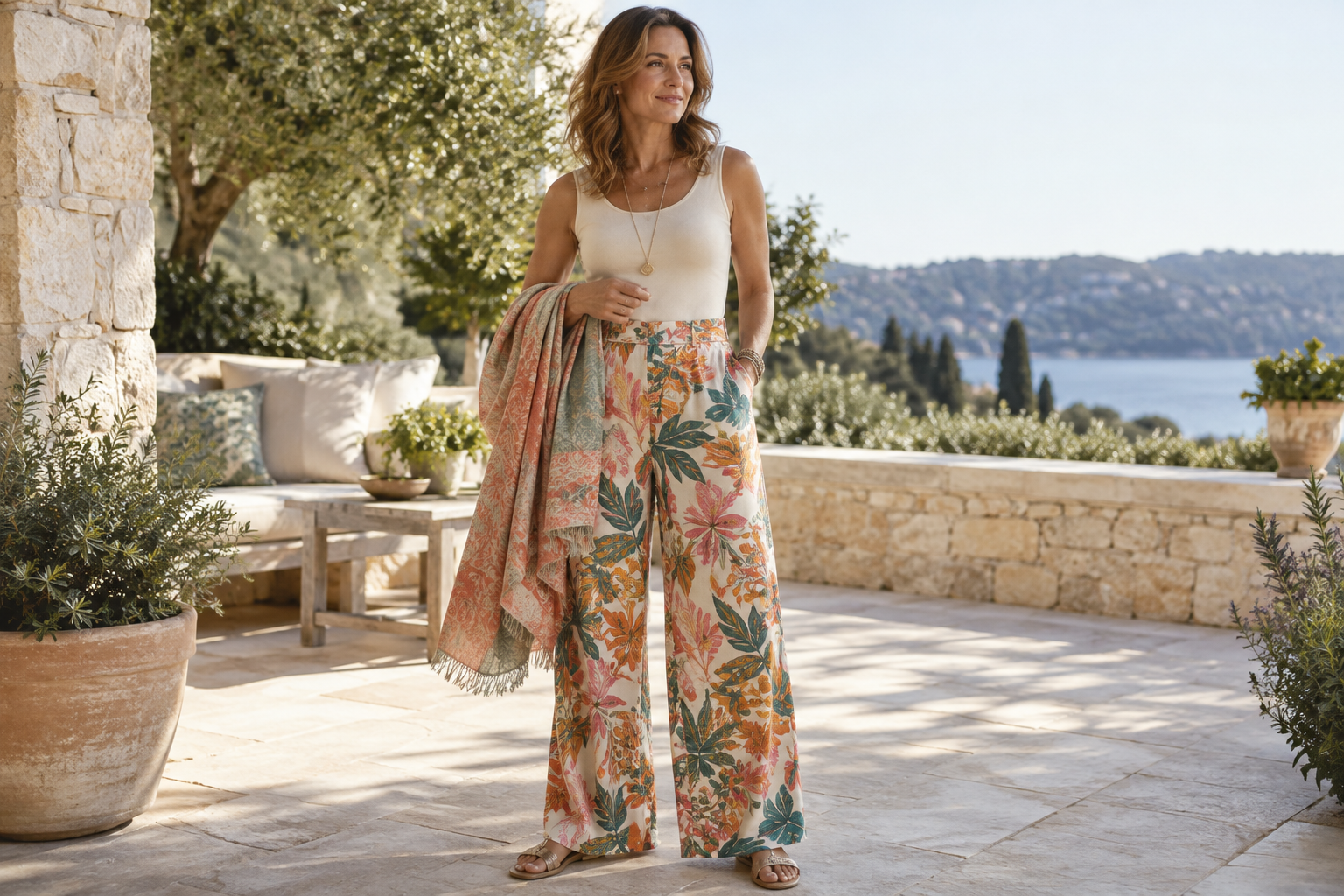
If your wrap is large enough and the fabric is suitable, it can make a handy cover-up over swimwear. This is an option for a rectangular wrap with enough length to overlap comfortably around your body.
Hold it behind your waist, bring the corners forward and overlap the fabric. Tie the upper corners at one hip only if they reach easily and form a secure knot without straining the material.
You can fold the top edge down first to adjust the length and expose the reverse. Keep the lower edge safely above the ground.
Add a simple vest if you want more coverage, plus sandals that are easy to walk in. I’d keep jewellery minimal here; the wrap already brings plenty of interest.
Practical tip: walk, sit and take a few steps up before relying on it. This is a cover-up over swimwear, not a guaranteed substitute for a skirt. Check the care label before exposing it to wet swimwear, sun cream or chlorinated water.
5. The one-shoulder evening layer
For dinner or an evening event, try making the drape deliberately uneven. It feels different from the everyday shoulder layer without requiring a new outfit.
Place the wrap across your back with one end longer than the other. Bring the longer end across your front and lay it over the opposite shoulder, leaving the shorter end hanging softly. Arrange the neckline loosely, with a glimpse of the reverse along the folded edge.
This works particularly well over a sleeveless dress or a simple top and wide-leg trousers. It adds coverage while leaving the clothes underneath visible.
Practical tip: test it while moving your arms. If it slips repeatedly, bring both ends back to the front rather than spending the evening holding your outfit together.
Let the reverse do some of the work
You don’t need five completely different outfits to make these ideas useful. Start with one familiar base and try two arrangements, then turn the wrap over and compare.
That flexibility is something I value in the reversible wraps in the AK Collection: colour, choice and room to wear a piece your own way.
Choose the version that feels comfortable, stays reasonably where you put it and suits what you’re doing. The best styling trick is the one you can forget about once you’re out the door.
Rachel Branson
Designer and founder of Art Katsura. I travel often, review hotels and retreats, and design colourful reversible pieces made for a life well travelled.